
The Scellier scheme, which has been closed to new investments since the end of 2012, still produces tax effects for owners approaching the end of their initial nine-year commitment. The extension option must be exercised at the right time, or the benefit of an additional reduction will be permanently lost.
The regulatory framework clearly distinguishes between the classic Scellier and the intermediate Scellier, and the associated declaration procedures remain poorly documented in most available guides.
Classic or Intermediate Scellier: The Right to Extend Does Not Apply to Everyone
The first point to verify before any procedure is the version of the scheme subscribed to. Only the intermediate Scellier entitles one to an extension beyond the initial nine-year period. The classic Scellier, on the other hand, stops abruptly at the end of this duration. No additional option exists for this regime.
This distinction has direct consequences. An investor in the classic Scellier who wishes to keep their property rented after nine years can do so, but without any additional tax advantage. The rents received will be taxed at the progressive income tax rate, without compensation from a tax reduction. The monthly savings effort mechanically increases.
For those under the intermediate Scellier, the extension occurs in three-year increments, with a total duration that can reach fifteen years. Each three-year increment generates an additional reduction. This mechanism requires continuous compliance with strict conditions, particularly the rent and tenant resource ceilings applicable to the property’s geographical area.
Owners who want to learn everything about the Scellier extension after 9 years must first locate their initial commitment to confirm the exact regime subscribed to at the time of acquisition.
Intermediate Scellier Tax Declaration: Forms to Fill Out for Extension

The declaration mechanics constitute the most common bottleneck. The extension option must be exercised in the income tax declaration for the year in which the initial period expires. Specifically, if the nine-year commitment ends for the year N, the extension must appear in the declaration filed in N+1.
Two forms are used:
- The 2042 RICI declaration, which allows for reporting the additional tax reduction related to the new three-year period. This is the form on which the amount of the tax advantage appears.
- The 2044 EB declaration, which formalizes the additional rental commitment. This document certifies that the owner commits to maintaining the property for three more years under the conditions of the intermediate Scellier.
- The usual supporting documents (current lease, tenant’s tax notice to verify compliance with resource ceilings) must be kept and made available in case of a tax audit.
An omission during the initial declaration is not trivial. The tax administration is not obliged to accept a late regularization, and field reports vary on this point. Some taxpayers have been able to regularize their situation during a claim, but there is no guarantee of favorable treatment.
Rent and Resource Ceilings in Scellier Zone: What Can Lead to Loss of Tax Advantage
Extending the scheme is not just about checking a box on a form. Throughout the duration of the extension, the initial eligibility conditions continue to apply. The rent charged must remain below the ceiling set for the geographical area of the housing, and the tenant’s resources must not exceed the regulatory threshold.
Exceeding the rent ceiling can lead to the loss of the tax advantage for the entire relevant three-year period, not just for the year of the excess. This rule makes monitoring the rent particularly sensitive during a lease renewal or a tenant change during the extension.
The ceilings vary by zone (A, A bis, B1, B2) and are revised annually. An owner who has not adjusted their rent for several years may find themselves in compliance by default, but one who has indexed their rent to the maximum allowed by the reference index must check that they have not exceeded the intermediate Scellier ceiling.
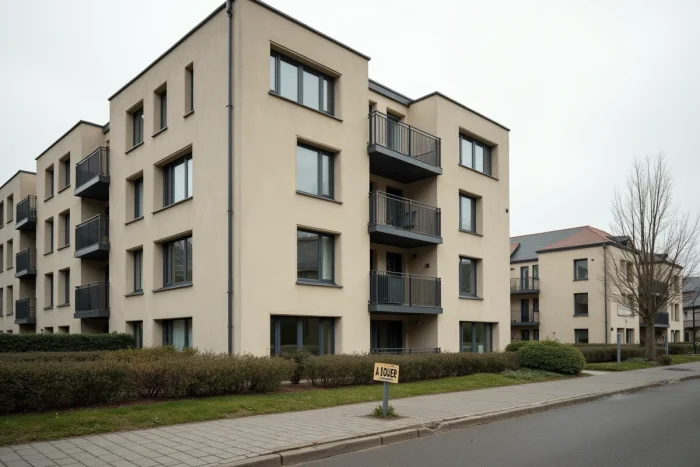
Decision After 9 Years of Scellier: Extend, Sell, or Switch to Furnished Rental
The tax extension is just one of the options. The economic decision after nine years must take into account several parameters that the mere tax reduction does not summarize.
The cost of holding the property has evolved since acquisition: condominium fees, property tax, potential compliance or energy renovation works. These items weigh on net profitability and must be compared to the residual tax gain offered by the three-year extension.
The additional reduction over three years remains modest compared to that of the first nine years. For a property with low net rental profitability or whose asset valuation has increased, selling may yield capital that can be reinvested under more favorable conditions.
Switching to non-professional furnished rental (LMNP) represents a third option. This regime allows for accounting depreciation of the property and significantly reduces taxation on rental income. However, it requires a change of lease, adjustments to the housing, and specific accounting. This transition is not compatible with the simultaneous maintenance of the Scellier scheme: one must choose between extension and switching to furnished rental.
The analysis depends on personal tax situation, local rental market, and the condition of the property. A property located in a tight zone with an intermediate Scellier rent lower than the free market represents a permanent loss of income. Conversely, a property in a relaxed zone where the Scellier ceiling corresponds to the market rent does not lose anything by remaining in the scheme.
The expiration date of the initial commitment sets the decision timeline. Waiting for the last declaration to decide means depriving oneself of maneuvering room, especially if a sale or a change in rental regime requires several months of preparation.