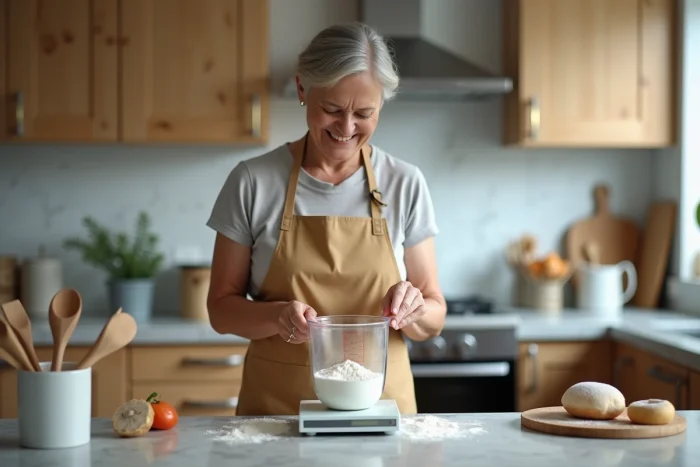
150 grams of flour do not occupy the same volume as 150 grams of milk. For most ingredients, 1 gram does not correspond to 1 milliliter. This difference arises from the density specific to each food, a parameter often overlooked when preparing recipes. Conversion errors can distort a dish, even with an accurate scale. Some dry or liquid ingredients require specific methods to ensure measurement accuracy. Using reliable converters becomes a key step to avoid approximations.
Why 150g to ml never converts randomly in a recipe
It all comes down to balance: mass and volume do not tell the same story. Confusing the two risks ruining a cake or ending up with a failed dough. Precision is not the obsessive detail of a Michelin-starred chef; it is the guarantee of a successful dish. You cannot improvise: converting 150g to ml easily respects the very logic of the recipe, avoids discrepancies, and reproduces the expected result, whether it’s a creamy sauce or an airy brioche.
One point to never lose sight of: the famous density. With water, there’s no trick; 150g corresponds to 150ml. But for flour, sugar, oil, or even honey, it’s a whole different game. Flour has a volume of 250 to 263ml for 150g, sugar ranges from 176 to 180ml, while oil reaches 163 to 167ml. Providing each ingredient with its appropriate measurement is the golden rule to adopt to avoid disappointments.
To understand why each conversion matters, keep these key principles in mind:
- It is essential to distinguish between weight and volume when measuring; there is no substitute between the two.
- The kitchen scale remains the undisputed referee for dry products, while the measuring cup dominates for liquids.
- The very texture of an ingredient, packed or sifted flour, liquid or creamy honey, influences the results.
Knowing how to convert 150g to milliliters is not an additional constraint. It simply gives the recipe every chance to succeed, ensuring that from one oven to another, from one season to another, you achieve the expected taste and precise texture.
Depending on the ingredient, 150g to ml: the conversions that change everything
The conversion of 150g to ml varies significantly from one food to another. While 150g of water invariably equals 150ml, everything changes if you switch to flour, oil, or honey. To better navigate everyday cooking, keep the following references in mind:
- Flour: 150g ≈ 250 to 263ml
- Oil: 150g ≈ 163 to 167ml
- Sugar: 150g ≈ 176 to 180ml
- Milk: 150g ≈ 146ml
- Water: 150g = 150ml
- Honey: 150g ≈ 106ml
- Butter: 150g ≈ 165ml
Each ingredient has a particular density that disrupts classic equivalences. A simple calculation exists for those who want to go further: volume (in ml) = mass (in g) / density (in g/ml). Even a subtle difference in density, such as wheat flour versus rice flour, powdered sugar versus granulated sugar, can affect the outcome.
Changing flour brands or opting for creamy honey instead of liquid honey requires adjusting quantities. Being mindful of density elevates your standards and gently avoids surprises on the plate.
From the right tool to practical tips: converting well to cook better
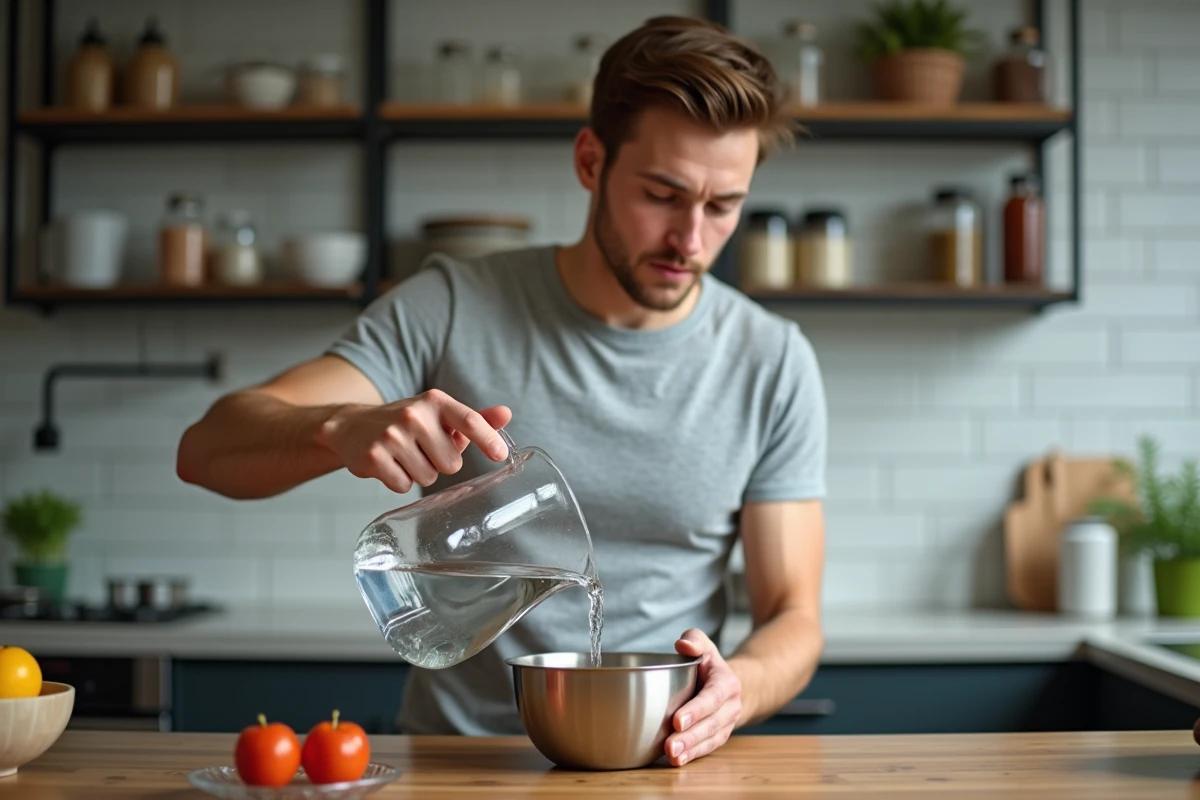
No compromise on rigor: the electronic scale remains the absolute tool if you are weighing dry products. For liquids, pull out the measuring cup: it alone allows for accurate measurement and juggling between milliliters and grams once you know the density.
When you need to improvise, everyday references come in handy. A yogurt pot equals 125ml, a tablespoon is 15ml, and a mustard glass reaches 150ml. A cup generally measures 250ml, and a teaspoon is 5ml. These substitutes can help, but they remain approximate: in baking, nothing replaces the reliability of a proper scale or a graduated measuring cup.
To avoid mistakes, the solution is straightforward: divide the quantity (in g) by the density of the ingredient. Conversion tables spare you the mental gymnastics and give you quick access to the correct measurement.
Mastering conversion is the guarantee of not letting chance enter the kitchen. No more failures, no more bland dishes or failed textures, only recipes that live up to their promise. Ultimately, this precise gesture changes the game and transforms everyday cooking into a realm of renewed successes.