
A passport with a residual validity that does not cover the six months required by the destination country, a miscategorized visa, or an omitted customs declaration: administrative blocks before a trip almost always result from a failure to check in advance. Preparing your administrative procedures for travel is not just about ticking off a generic list. Each destination imposes specific rules, and processing times vary depending on the period and type of document.
Residual validity of the passport and the trap of the extended identity card
The primary source of boarding refusals remains the residual validity of the passport. Most countries outside the European Union require a validity of six months after the expected return date, not after the entry date. Confusing the two can lead to being stuck at the check-in counter.
For travel within Europe, the national identity card is theoretically sufficient. In practice, identity cards automatically extended by five years (from ten to fifteen years of face validity) pose a problem. Several countries, including those within the Schengen area, refuse these cards whose printed date has expired, even though they remain legally valid in France.
We recommend checking the official position of the destination country on the website of the Ministry of Europe and Foreign Affairs before traveling with an extended card. In case of doubt, systematically favor the passport to avoid any discussion at border control.
To centralize your checks, the Travel Express website gathers the main formalities by destination and type of document.
Visas: distinguishing e-visa, visa on arrival, and consular visa
General public articles treat the visa as a unique formality. In reality, three regimes coexist, and their constraints differ radically.
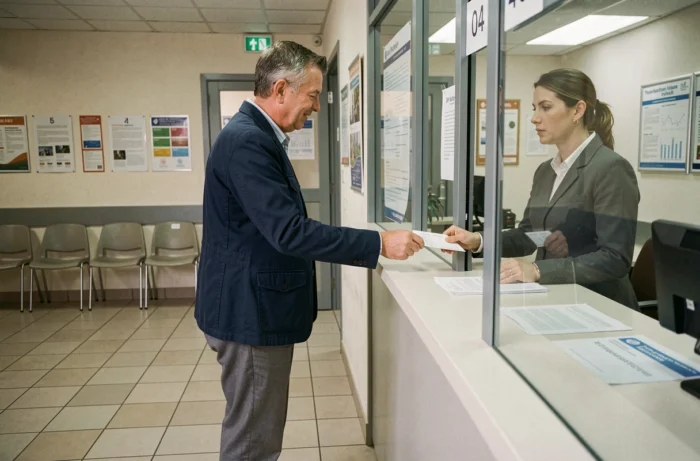
The classic consular visa involves submitting a physical or mail application, with processing times that can take several weeks depending on the season and the consulate. The appointment itself may require scheduling several weeks in advance.
The e-visa is requested online before departure. For some countries like Ethiopia, the French Ministry of Europe and Foreign Affairs specifies that a paper copy of the e-visa is required upon entry. Relying solely on the digital version stored on a phone exposes you to refusal if the device malfunctions or if the network is unavailable at the border checkpoint.
The visa on arrival seems the simplest, but it is discouraged in many cases. The same sheet dedicated to Ethiopia explicitly states that the visa on arrival is not recommended and that the online visa before departure should be prioritized.
- Check the exact type of visa required for your nationality and reason for stay (tourism, business, transit) on the country sheet of the Ministry of Foreign Affairs.
- Always print a paper copy of any e-visa obtained, even if the country accepts the digital version.
- Check transit conditions: a flight with a stopover in a third country may require a separate transit visa from the final destination visa.
- Anticipate extensions: overstaying a visa can lead to fines and daily penalties, as indicated in the official sheet for Ethiopia.
Customs declaration and thresholds for goods upon return
Any amount exceeding 10,000 euros transported into or out of French territory must be declared. This obligation concerns banknotes, coins, gold, checks, and their equivalent in foreign currency, whether you own them or not. The declaration can be made in advance via the French customs online service DALIA or at the time of crossing the border.
For goods brought back from a trip outside the European Union, the DeclareDouane service allows you to pay duties and taxes online. The quantities of tobacco and alcohol allowed without declaration vary depending on whether you are returning from an EU member country or a third country. The thresholds are not the same, and confusing them can lead to seizure.
Products subject to specific rules (plants, foodstuffs, medicines containing controlled substances) and completely prohibited products (counterfeits, certain protected animal or plant species) are subject to enhanced controls. Checking the list of prohibited goods before returning avoids sanctions ranging from fines to criminal prosecution.
Consular tours and procedures for French citizens residing abroad
French citizens living outside France often assume that traveling to the embassy or consulate of their country of residence is the only option for renewing a passport or identity card. However, consular tours are organized in cities without permanent representation.

A consular tour announced in Saint-Jean, Canada, for example, allowed for the appointment-based submission of passport, national identity card, or digital identity requests. These tours are occasional and announced on consulate websites with limited notice.
Regularly monitoring the website of the relevant consulate allows you to catch these slots before they fill up. Processing times remain the same as for a submission at the consulate, but the travel is significantly reduced.
Health insurance and European Health Insurance Card
The European Health Insurance Card (EHIC) covers medically necessary care in the European Economic Area and Switzerland. It does not cover repatriation, care in a non-contracted private establishment, or costs related to medical evacuation.
For any destination outside the EEA, travel insurance covering repatriation and medical expenses is a prerequisite. Reimbursement ceilings vary greatly depending on the contracts. We observe that many travelers discover too late that their credit card includes limited travel insurance, with exclusions for high-risk sports or long-term stays.
Updating vaccinations according to the destination is another health aspect to anticipate. Some vaccines require several injections spaced weeks apart, making any last-minute procedures impossible.
The administrative preparation for a trip relies on precise checks, destination by destination. A missing or miscategorized document is enough to turn a departure into a dispute. It is better to spend an hour cross-referencing official sheets than to negotiate at an airport counter.