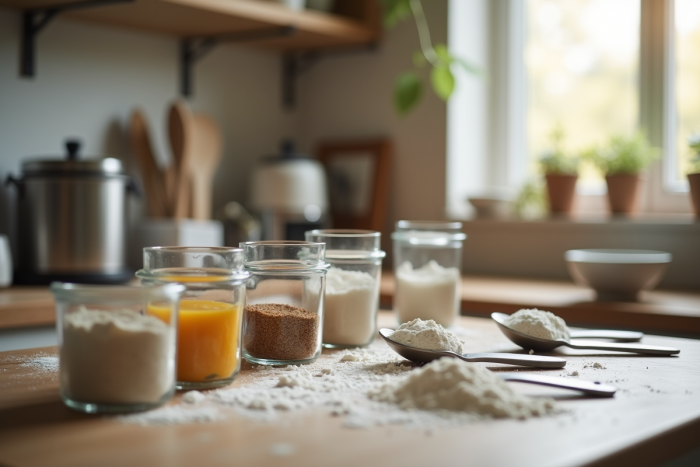
A French tablespoon contains 15 ml, while an American tablespoon has 14.8 ml. A measuring cup purchased at a supermarket sometimes displays approximate equivalents between centiliters and milliliters, leading to discrepancies that are invisible to the naked eye but very real on the plate. Between Anglo-Saxon recipes and European habits, confusion sets in quickly.
Conversion errors cannot be corrected with a magic ingredient or hidden talent. They simply occur when the measurement references are not perfectly clear. However, once the right reflexes are adopted, it becomes easy to avoid going in circles around the same dead ends.
Why do volume conversions pose so many problems in cooking?
We often believe we have mastered the art of measurement, and then a recipe suggests quantities in milliliters while the equipment only uses centiliters or liters. Even the most meticulous can go off track: switching from one unit to another creates chaos. That’s when, unexpectedly, missteps occur that push a dish into the “approximate” category, and the final result reflects this.
By juggling between the graduations of the measuring cup, the promise of a light batter or the success of a sauce sometimes hinges on a few digits. Rounding off hastily or neglecting a unit can change everything. It’s a common misconception that 300 ml or 30 cl are the same. However, each poorly adjusted conversion can alter the texture of a cake or muddle the finesse of a dessert.
Liquids allow for no laxity. A few drops off and the cream turns thick, the batter sticks. The precision in converting milliliters to centiliters is not a matter of fussiness, but a true respect for the recipe and its balances.
For those who prefer to proceed without making mistakes, the best option is to consult clear reference points online, such as the page 300 ml in liters, which provides a quick overview of the correspondence between milliliters and liters. When each unit is understood from the start, each step of the process flows smoothly, and the recipe leaves no room for haphazard improvisation.
Small tips and pitfalls to avoid to succeed in all your conversions between ml, cl, and more
Confusions between milliliters and centiliters are common, especially when adapting a foreign recipe or preparing a large meal. Keep in mind: 1 cl equals 10 ml. Just multiply or divide by ten to navigate from one unit to another. This simple yet crucial reference will save you from many unexpected mishaps during measuring.
To save time and keep your mind at ease, displaying a conversion chart in the kitchen can make a difference. Take a look at it, and finish the calculations in your head: 35 cl becomes 350 ml, 200 ml translates to 20 cl. Those who like to check on the fly will prefer apps or online converters, always handy during preparation.
These minimal discrepancies, imperceptible at first glance, change everything: a hasty conversion can affect the entire texture, resulting in a dessert that is too liquid or a sauce that is too thick. To avoid falling into these traps, it’s important to pay attention to every instruction regarding volumes, especially when dealing with liquids sensitive to the slightest variation.
Here are some reflexes that make a difference in preparation:
- Think about converting all necessary values in advance, even before gathering your ingredients.
- Keep a precise conversion chart handy, tailored to your usual cooking style.
- Always check the unit indicated on the recipe and your measuring tool (ml, cl, or l) to avoid an error from the start.
In cooking, everything does not solely depend on the ingredients: sometimes, the success of a preparation relies on the perfect mastery of these technical transitions. During your next dish, pay attention to the detail of the measurements: between the lines of conversion lies the difference between a shaky result and the satisfaction of a well-executed dish.