
A couple discovers on moving day that the truck reserved the day before is unavailable, that the boxes picked up from the supermarket are too fragile for the books, and that no one has requested a parking permit in front of the building. Three problems that, on their own, can turn a planned day into twelve hours of hassle.
Organizing a low-cost move is not just about finding the cheapest quote. It’s a matter of timing, logistics, and making choices about what to keep, what to transport, and how to protect it.
Parking permit and truck access: the point that no one prepares early enough
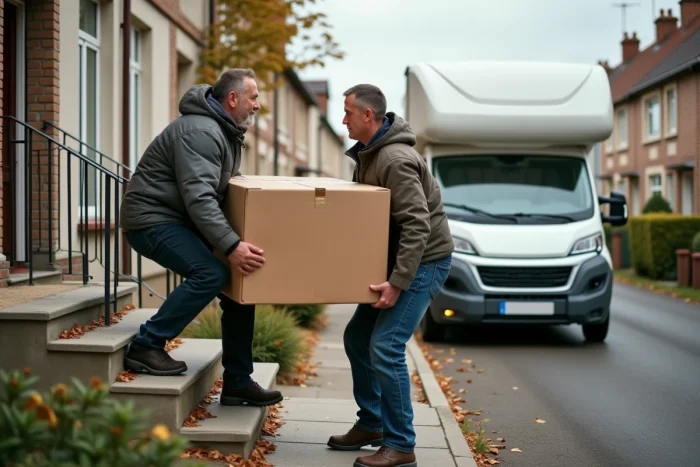
Most delays on the big day come from access issues. The truck cannot park in front of the door, furniture must be carried fifty meters, and each round trip eats up time and energy.
In the city, requesting a parking permit from the town hall at least two weeks in advance radically changes the course of the day. The procedure is often free or costs a few dozen euros depending on the municipality, but it requires processing time. Submitting the request too late risks a denial or a poorly located spot.
Also, remember to check the width of the passage and the height of the porch if you are renting a van. A twenty-cubic-meter truck does not fit everywhere. Useful resources can be found on the C Ma Déco moving website to anticipate this type of logistical constraint before signing anything.
Moving costs: compare the three options before choosing
The classic reflex is to request a quote from a professional mover, find the price high, and then do everything yourself without measuring the actual effort. Both options have a cost, but not the same type of cost.
Moving alone with truck rental
Renting a van is significantly cheaper than a full service. In return, you need to mobilize friends, buy or gather packing materials, and assume the risk of breakage. Booking the vehicle three to four weeks in advance allows you to get a better rate and choose the size suited to the actual volume.
Intermediate option
Some providers offer only transportation and handling, without packing. You prepare the boxes yourself, and a team loads and unloads. This option reduces the bill compared to the full service while saving your back.
Complete service by professional movers
This is the most comfortable and most expensive solution. It is justified when the volume is large, when moving far, or when transporting fragile items (piano, artwork). In any case, requesting at least three detailed quotes remains the basis for comparison.
- Check what the insurance offered by each mover covers, especially for valuable items and fragile furniture
- Compare the cost of additional kilometers if the distance exceeds the initial package
- Ask if the price includes disassembly and reassembly of furniture, which is often charged extra
Moving schedule: why the chosen time slot weighs as much as the volume
The date and day of the week directly influence the budget. The majority of moves concentrate between June and September, with a marked peak at the beginning of summer. During this period, the rates of professionals and vehicle rental companies mechanically increase.
Moving from Monday to Thursday, between October and April, significantly reduces the bill. Weeks in the middle of the month are also less in demand than the end of the month, often aligned with lease dates.
If professional or school constraints require a summer move, booking as early as possible (six to eight weeks in advance) limits price increases. Feedback on this point varies by region, but the trend is consistent: the higher the demand, the higher the price.

Protect fragile items and furniture without overpaying for materials
Specialized new boxes (wardrobe, dishes, bottles) are expensive when you add up the quantities. Several alternatives work very well if you plan ahead.
Local businesses (supermarkets, pharmacies, wine shops) regularly give away their used boxes. Favor boxes for bottles and canned goods, which are thicker and more durable than those for chips or cereals. Collecting them two to three weeks before the move allows time to accumulate enough.
For dishes and fragile items, newspaper and old sheets effectively replace bubble wrap. Wrapping each plate individually and filling empty spaces in the box with linen avoids almost all breakages.
- Place heavy items (books, dishes) in small boxes to limit weight and make carrying easier
- Use vacuum bags for comforters and pillows, which frees up significant space in the truck
- Photograph the connections of electronic devices before unplugging them to save time during reassembly
Labeling boxes: a five-minute investment that saves hours
A color code by room (a roll of colored tape for each destination) speeds up unloading. Each box goes directly to the right room without needing to be opened to see what it contains. Noting the contents on two sides of the box avoids having to turn each box in the truck.
For furniture, protecting the corners with cut cardboard and secured with tape is sufficient in most cases. Moving blankets can be rented for a few euros if transporting items sensitive to scratches.
The last box loaded into the truck should be the one opened first in the new home: coffee maker, cups, phone charger, toilet paper, soap, sheets for the first night. This detail transforms the arrival in an empty home into something manageable rather than a treasure hunt in a mountain of boxes.