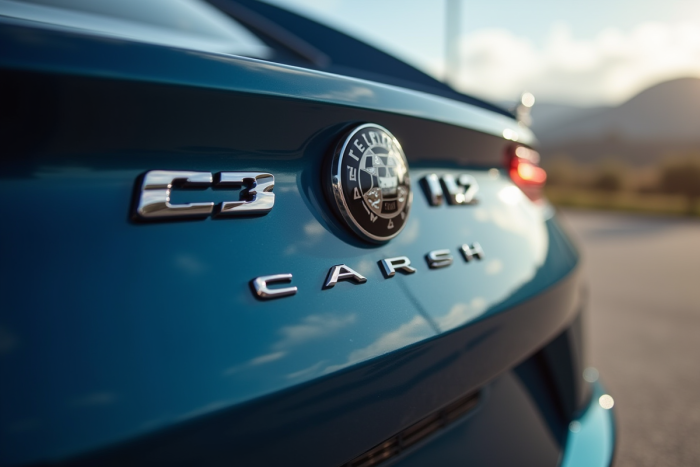
An automotive acronym can lose its meaning when crossing a border, retain an air of mystery even for some enthusiasts, or change its significance over the decades.
Some acronyms have become more famous than the full name of the brand they represent, while others continue to blur the lines, mixing industrial heritage and marketing strategy. The stories behind these abbreviations often reflect unexpected choices and surprising evolutions in the industry.
Why are automotive logos so fascinating? A dive into their history and secrets
Automotive logos captivate at first glance. Each emblem carries a piece of automotive industry history and shapes the identity of its manufacturer. In France, it’s hard to ignore the lion of Peugeot, inspired by a regional coat of arms, or the diamond of Renault, which has traversed the ages while asserting the modernity and historical roots of the manufacturer.
Behind every logo, there is an ambition on display, a vision taking shape, a heritage asserting itself. Audi, for example, owes its four interlocking rings to the union of DKW, Horch, Wanderer, and Audi, a merger that marked German automotive history. The BMW logo, often associated with a stylized propeller, echoes the brand’s aeronautical origins, although this interpretation is currently a topic of debate among experts.
The symbolic value reaches new heights with Ferrari: the prancing horse, borrowed from the coat of arms of driver Francesco Baracca, embodies both energy and homage to its Italian roots. Other acronyms remain mysterious: the SR that appears on certain models intrigues and invites exploration. To grasp all the nuances of this acronym, the page “Meaning of SR in vehicles: Everything you need to know! – Auto Mechanic Info” offers a detailed analysis.
True visual signatures, automotive logos convey the spirit of the brand. They embody its values, ambitions, and history, creating an immediate connection with everyone who crosses their path, both seasoned enthusiasts and newcomers.

Decoding the symbols: what the acronyms of the biggest brands really hide
An automotive logo is never the result of chance. Behind each symbol, a patient construction blends style, history, and innovation. Take the prancing horse of Ferrari: it is not just a nod to Francesco Baracca; it embodies power and success, two qualities that the Italian manufacturer places at the heart of its philosophy. At Mercedes-Benz, the three-pointed star asserts the brand’s mastery over land, air, and sea, a graphic summary of its industrial ambition.
The colors also speak: the blue and white of the BMW logo recall the brand’s Bavarian origins. As for the four interlocking rings of Audi, they represent the founding alliance of DKW, Horch, Wanderer, and Audi, a union that still leaves its mark today.
Here are some striking examples of symbols and their meanings:
- Porsche chooses the horse to represent Stuttgart, the city of the brand’s origin.
- The lion of Peugeot evokes robustness and reliability, inherited from a long industrial tradition.
- Tesla highlights the cross-section of an electric motor, underscoring its technical commitment.
Each acronym thus carries a story, a hidden intention. Car logos are never mere ornaments: they summarize decades of boldness, technological advancements, and challenges met. The power of the symbol anchors itself in memories, weaves a thread between past and future, and continues to fuel the fascination of automotive enthusiasts.