A couple books a venue in October, signs with the caterer in November, then realizes in January that the paperwork for the town hall wasn’t submitted on time. The schedule falls apart. Planning a wedding without a hitch starts with getting the administrative and logistical timeline under control before thinking about decoration colors.
Town hall formalities and legal requirements for marriage
In France, civil marriages must take place at the town hall, or, under certain conditions, in another municipal building within the municipality. A private reception venue, however charming, cannot replace this legal formality. So the first step is to contact the town hall to find out what dates are available and which documents are required.
The list of required documents and the notice period for publishing the banns vary by municipality. Contacting the town hall as early as possible helps you find out exactly what the local requirements are. Underestimating these deadlines can hold up everything else: the venue, caterer and other vendors.
When planning your wedding with 123 Mariages, you can start looking for vendors while handling the administrative paperwork, avoiding the loss of several weeks.
Wedding budget: the expenses most likely to spiral
The venue and caterer account for the largest share of the budget. Everything else (photographer, florist, DJ, decorations) has to fit into what remains. Setting an overall budget before signing anything helps avoid painful compromises later on.
Three expenses are more likely than others to spiral:
- Drinks: an open bar with no spending limit can double the catering bill. Negotiate a fixed-price package or set a specific number of bottles per guest.
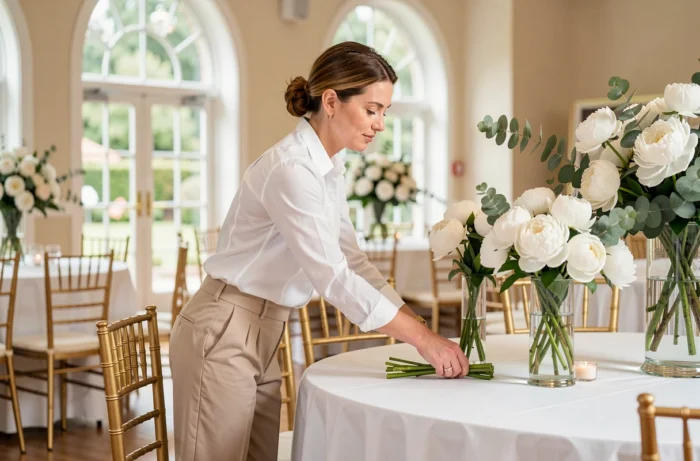
- Floral decorations: the gap between a Pinterest idea and the florist’s quote can be dramatic. Ask for a quote based on specific photos, not a general mood or style.
- Last-minute extras: chair covers, a photo booth, a candy bar. Each seems minor, but they add up. Listing every expense in a shared spreadsheet is still the best safeguard for both partners.
One often-overlooked point: music played during the reception may require you to contact organizations that manage copyright. The venue manager or the couple should check whether a declaration is required, depending on how the music is played (DJ, live band or playlist).
Weather backup plan: the clause no one negotiates
Booking an outdoor venue without a written Plan B is a gamble. The weather backup plan should be set out in agreements with each vendor, not left to improvisation on the day.
Specifically, put three things in writing: who decides to move the event indoors, what time that decision must be made, and what additional costs apply (tent setup, heating, extra lighting). A caterer notified the day before can adapt their service. A caterer notified an hour before the cocktail reception, much less so.
Autumn is becoming a more popular wedding season, with venues sometimes more available and rates potentially more affordable outside the summer peak. The trade-off is a higher risk of bad weather, making a backup plan even more essential.
Check the venue’s accessibility before signing
A venue that describes itself as accessible may not be accessible in practice. Public-access buildings must make an accessibility register available to the public. Visiting the entire route in person (parking, ceremony area, reception space and restrooms) is the only reliable way to check, especially if any guests use wheelchairs or have mobility difficulties.

Ceremony and reception: coordinating vendors without a hitch
On the big day, the most common problem isn’t a forgotten decoration. It’s a vendor arriving late because no one gave them the exact address, or a DJ setting up their equipment just as the photographer had planned to take group portraits.
A single document with schedules, contact details and access information for every vendor, sent a week before the wedding, prevents most mishaps. Include:
- Each vendor’s arrival time and unloading location
- The name and phone number of an on-site point person (not the couple, who will be busy)
- The schedule hour by hour, from morning makeup through the end of the evening
- Venue restrictions: noise curfew, delivery access and any specific rules
Appointing a day-of coordinator, whether it’s an organized member of the wedding party or a professional, makes all the difference. This person handles delays, vendor questions and minor unexpected issues so the couple can focus on their guests.
Decor and theme: choose a realistic guiding concept
A wedding theme works when it can be carried through effortlessly across three elements: the invitations, the table and the venue. Beyond that, decorations can become excessive, costly and often less elegant than expected.
Choose a simple guiding concept (a palette of two or three colors, or a dominant material such as wood or linen) to create a cohesive look without buying too much. Secondhand decorations, resold by couples on specialist platforms, can reduce this expense without compromising the result.
The same principle applies to the menu: a well-executed meal made with seasonal ingredients will leave a stronger impression on guests than an enormous buffet where every dish is mediocre. A tasting before signing is standard practice for caterers.
A successful wedding depends less on inspiration than on clear agreements with every vendor and an up-to-date planning timeline. Couples who spend their first few weeks handling the paperwork and setting the budget before choosing tablecloths can avoid most crisis situations.