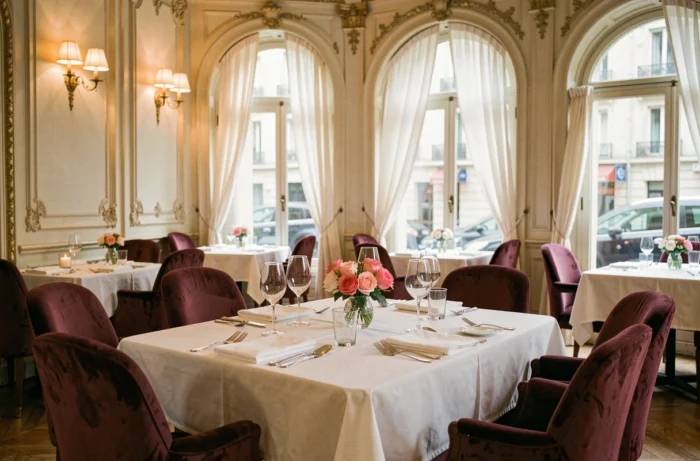
Booking a table at a fine-dining restaurant in Paris seems simple—until one guest announces that they eat neither meat nor gluten. The restaurant you chose to celebrate a birthday or round off a trip suddenly becomes a puzzle. The good news: Paris’s dining scene has evolved, and several exceptional restaurants now offer menus designed to cater to a range of dietary needs without compromising on the quality of the meal.
Exceptional dining in Paris: when your group has different dietary needs
Have you ever found yourself in this situation: five guests, three dietary requirements, and one restaurant to find? It’s a common challenge when planning a celebratory meal in Paris. The usual approach is to look for a classic French fine-dining restaurant and hope the chef will “accommodate” everyone. That rarely works at restaurants with set menus.
There are three ways to approach a group with different tastes and dietary needs:
- Choose a flexible menu rather than a single set menu: some restaurants offer several parallel tasting menus (plant-based, classic, gluten-free), allowing each guest to enjoy their own experience without compromise.
- Choose a restaurant where the cuisine is plant-based, but which still offers meat or fish options: the meal feels cohesive for the group, and no one feels left out.
- Opt for an à la carte menu in an elegant setting, where everyone can put together their own meal from a selection of high-quality dishes.
Among Paris’s exceptional restaurants, several newer spots have built this approach into their menus from the outset, transforming the group dining experience.
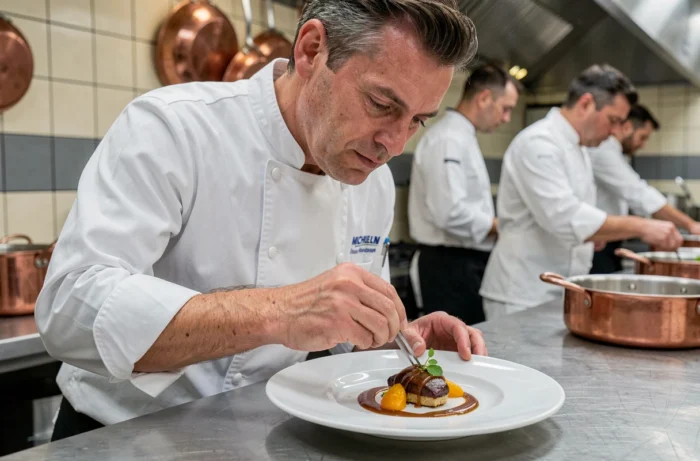
Fine plant-based dining in Paris: a genuine choice, not a fallback
Plant-based fine dining has moved beyond niche status. It’s no longer a substitute menu tucked away at the bottom of the menu to reassure guests who don’t eat meat.
Datil, for example, is a Paris restaurant focused on plant-based cuisine that also serves meat and fish. This hybrid approach solves a practical problem: one restaurant works for the whole group, without anyone having to compromise on quality. Vegetarian guests get cuisine created with them in mind, not a last-minute adaptation.
This trend has reached Michelin-starred restaurants, too. When a three-Michelin-star restaurant creates an entirely plant-based menu, it’s no longer a statement of activism—it’s a culinary style in its own right. For a special meal, plant-based cuisine is becoming just as important a factor as the view or the décor.
What to check before booking
Call the restaurant. Websites don’t always reflect what’s actually on the menu that day. Ask specifically whether the tasting menu can be adapted to a plant-based version, and whether allergens are managed in the kitchen—not just listed on the menu.
A restaurant that answers these questions clearly is one that knows what it’s doing. Vague answers often point to an improvised adaptation.
Exceptional dining in Paris beyond the usual formats
Competitors often focus on restaurants with views of the Eiffel Tower, dining in the dark, or Seine cruises. These are worthwhile experiences, but an exceptional meal is about more than the view or an immersive concept.
Several notable new restaurants in Paris are moving beyond the traditional destination-restaurant format. Some offer creative market-fresh cuisine in an intimate setting, away from grand dining rooms and spectacular décor. What makes them exceptional is the precision of each dish, the quality of the ingredients, and the care given to the service.
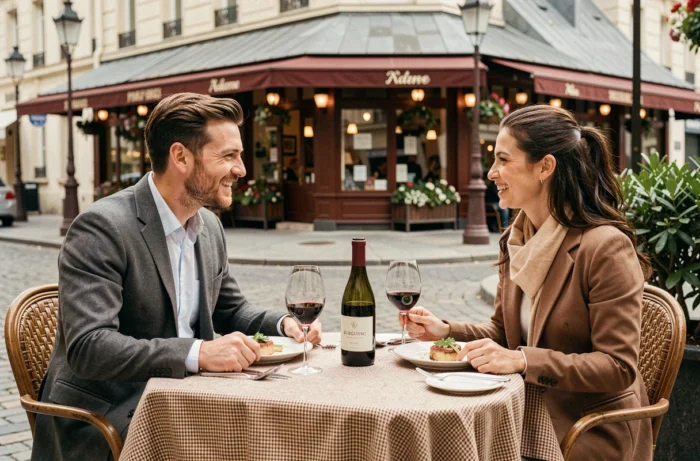
A fusion of culinary traditions as a hallmark of exceptional dining
Paris is also home to restaurants that bring different culinary traditions together. They’re a practical alternative for groups tired of classic French fine dining, or for guests whose dietary preferences are better suited to cuisines with a tradition of offering plenty of vegetarian options.
An exceptional restaurant isn’t defined by its price or décor, but by its ability to deliver a cohesive experience from the start of the meal to the end. The setting matters, the food matters, and so does the way the restaurant caters to a diverse group of guests.
À la carte, tasting menu, or market menu: which format suits your meal in Paris?
The format you choose has a direct impact on how well a group meal goes. Each option has its advantages and limitations.
- The tasting menu ensures a well-paced progression of dishes and carefully chosen wine pairings. It’s a good fit for groups with similar tastes, but can be a problem when a guest has dietary restrictions—unless the restaurant offers parallel versions.
- An à la carte menu offers flexibility. Everyone can choose according to their tastes and dietary needs. The downside: the experience may feel less unified, and dishes may arrive at different times.
- A short market menu (two or three courses) often offers the best balance between fine-dining quality and a manageable budget. Several Paris restaurants serve one at lunchtime on weekdays, at a significantly lower price than dinner.
For a birthday or special occasion, the tasting menu remains the most memorable option. For lunch with friends who have different tastes, an à la carte menu at a restaurant with a sufficiently varied selection will be more comfortable.
Paris’s fine-dining scene is no longer limited to a choice between bistros and grand hotels. The restaurants that do group dining best are those that have anticipated a range of expectations, from dietary needs to service formats. Before booking, ask the restaurant the right questions, check how flexible the menu is, and choose a format that suits your guests. This preparation, far more than the number of stars, is what turns dinner into a lasting memory.