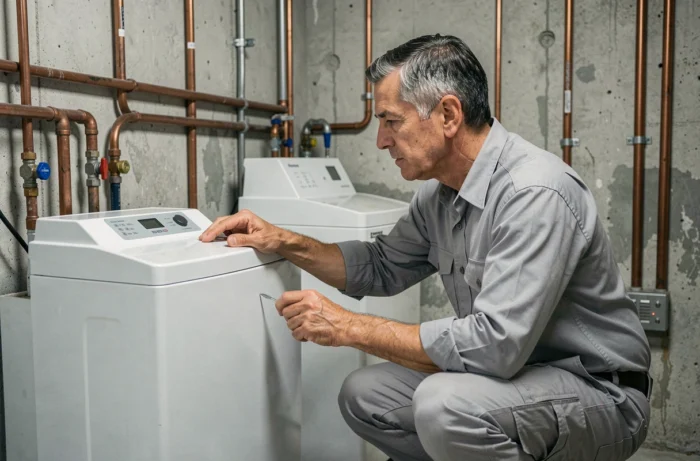
A full salt tank, a display that looks normal, and yet limescale is building up on the taps again. This is a scenario we encounter regularly: the water softener appears to be working, but the water coming out is still hard. Before suspecting a mechanical fault or ordering a part, a few methodical checks can often restore proper treatment. Troubleshooting water softeners almost always starts with a visual inspection and a few manual checks that require no special tools.
Salt bridge and false brine: the water softener’s invisible fault
This is the most commonly overlooked cause of malfunction. The tank looks full of salt, you check it at a glance, and move on. The problem is that a hard crust can form on the surface, creating a bridge that conceals an empty space underneath.
In this situation, the salt no longer dissolves in the water in the tank. The brine needed to regenerate the resin does not form, and the regeneration cycles run without doing anything. The unit uses water and electricity without restoring the resin’s ion-exchange capacity.
To check, press down on the surface of the salt with a broom handle or another sturdy utensil. If the layer resists and then suddenly gives way, a salt bridge has formed. Break it up by hand, remove the hardened chunks, and let the salt dissolve before starting another regeneration cycle. For more information, consult this resource on water softener troubleshooting to prepare for other common issues.
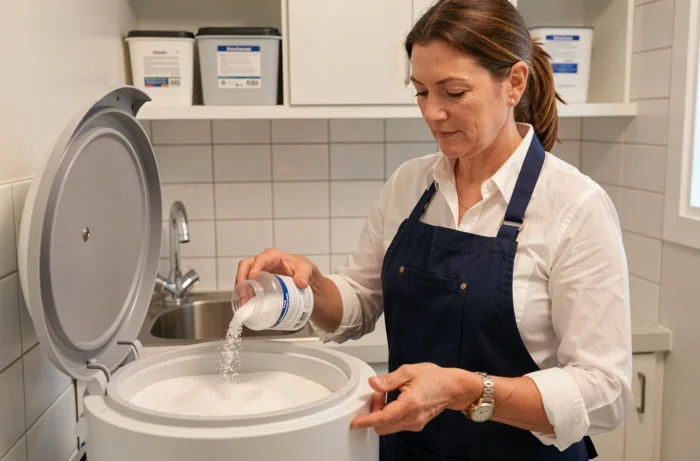
This problem is more common with block salt or in rooms where the temperature fluctuates significantly, such as an uninsulated garage or an exposed laundry room. Checking the brine by hand is the first thing to do before trying anything else.
Dirty water softener resin: when iron or poor maintenance prevents treatment
If a salt bridge is not the cause and regeneration starts normally, the problem is often with the resin itself. Two situations should be considered.
Iron fouling
When the water comes from a well or a supply with a high iron content, the resin gradually becomes clogged. Look for orange or brown marks in the tank, on any visible resin, or in the water discharged during regeneration. A dedicated resin cleaner can loosen these deposits and restore the resin’s ion-exchange capacity, provided it is used before the fouling becomes irreversible.
Failure to carry out annual maintenance
Without regular cleaning, the resin loses effectiveness even when treating standard municipal water. Annual maintenance involves more than just refilling the tank: it includes cleaning the salt tank, checking the brine injector, and testing the hardness of the water leaving the unit.
A water softener can contain salt and still stop treating the water altogether if the injector is blocked. This small component draws in brine during regeneration. When it becomes clogged with limescale or dirty salt particles, the resin can no longer regenerate. Cleaning or replacing it is part of routine maintenance that you can carry out yourself on most models, with the manual to hand.
Hardness settings and bypass: two checks to make before calling a professional
Before contacting a technician, two quick checks can rule out many false diagnoses.
Residual hardness set too low or too high
A water softener set to produce water with zero French degrees of hardness can cause a real problem: over-softened water can corrode pipes, especially copper ones. Greenish marks may appear at outlets, or even tiny leaks at the fittings. Conversely, a setting that is too high allows enough limescale through for deposits to build up again.
Check residual hardness using test strips or a TH test kit at the water softener outlet. If the measured value does not match the setting shown on the valve, this is a reliable sign of a malfunction, such as saturated resin, an incorrectly programmed regeneration cycle, or a brine problem.
Bypass position
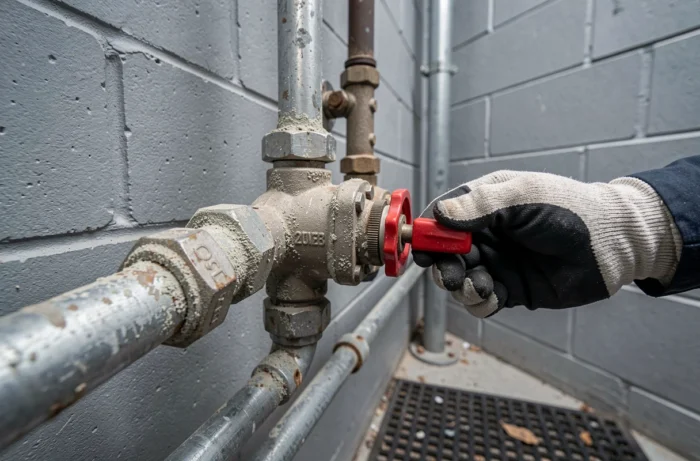
The bypass valve allows water to flow around the softener. After plumbing work, a water outage, or a simple oversight, the unit may be left in bypass mode without anyone noticing. The water then flows directly into the plumbing system without being treated. This check takes just a few seconds and can save you an unnecessary service call.
- Check that the water softener’s inlet and outlet valves are open and that the bypass valve is closed.
- Check that the power supply is connected and that the control valve display is on.
- Test the water hardness at the nearest tap downstream of the unit, not upstream.
- Make sure an untreated cold-water tap remains accessible in the home, in accordance with the requirements of the French Public Health Code (Article R. 1321-53).
When to call a professional about your water softener
You can deal with a salt bridge, a bypass valve in the wrong position, or a clogged injector yourself. However, some symptoms point to a problem beyond routine maintenance.
A leak around the control valve, a continuous flow to the drain outside regeneration cycles, or a persistent drop in pressure after checking the pre-filter warrant a technician’s attention. Likewise, if the resin has never been replaced and cleaners no longer restore its treatment capacity, replacing the entire resin bed requires the right expertise and calibration for the unit’s capacity.
Before the service visit, note the brand, model, valve reference, and any error codes displayed so the professional can prepare the necessary parts. Providing an accurate diagnosis over the phone reduces the time needed for the repair and often the cost.
Most water softener faults are caused by poor maintenance or a forgotten setting, not a serious mechanical failure. Keeping a maintenance schedule—checking the salt, testing water hardness, and cleaning the unit annually—is the most reliable way to extend its service life without making repeated service calls.