
Making an appointment with a specialist used to involve a journey filled with phone waits and endless waiting lists. Now, some platforms handle several million bookings each month in France, disrupting the organization of practices and the management of medical time.
Algorithms assign time slots, remind patients of consultations, and anticipate cancellations. This new operation profoundly changes interactions, raises questions about the confidentiality of health data, and redistributes roles between caregivers and patients.
When medical appointment booking goes digital: understanding a profound shift in the healthcare system
Forget the endless phone queues. Since the digitalization of medical appointments has taken hold, the patient journey has transformed. Everything is now done in just a few clicks: booking a consultation, choosing a time, receiving a confirmation. This evolution is not trivial and reflects a deep adaptation of medicine to a hyper-connected society.
Digital health is no longer limited to telemedicine. Applications, secure messaging, electronic medical records, connected objects: the link between patients and healthcare professionals is being redefined more and more each day. For practitioners, artificial intelligence optimizes schedule management, anticipates absences, and simplifies the follow-up of vulnerable patients. The healthcare system adjusts, resources are better utilized, information circulates faster and more accurately. The individualization of the care pathway is becoming the norm.
Some practices go further and bet on the professional connection to ClicRDV. With this system, all appointments are centralized, secured, and accessible in an instant. The logic is no longer just to digitize the calendar but to rethink the sharing of responsibilities, to maintain control over the data. Proximity, transparency, technology: these three demands form the foundation of a new medicine that is attentive and rigorous.
Here’s what this transformation concretely changes for practices and patients:
- Optimization of medical time: reduction of missed appointments
- Facilitated tracking of care pathways: centralization of electronic medical records
- Emergence of personalized services: notifications, reminders, remote consultations
What are the concrete impacts on the doctor-patient relationship and the quality of care?
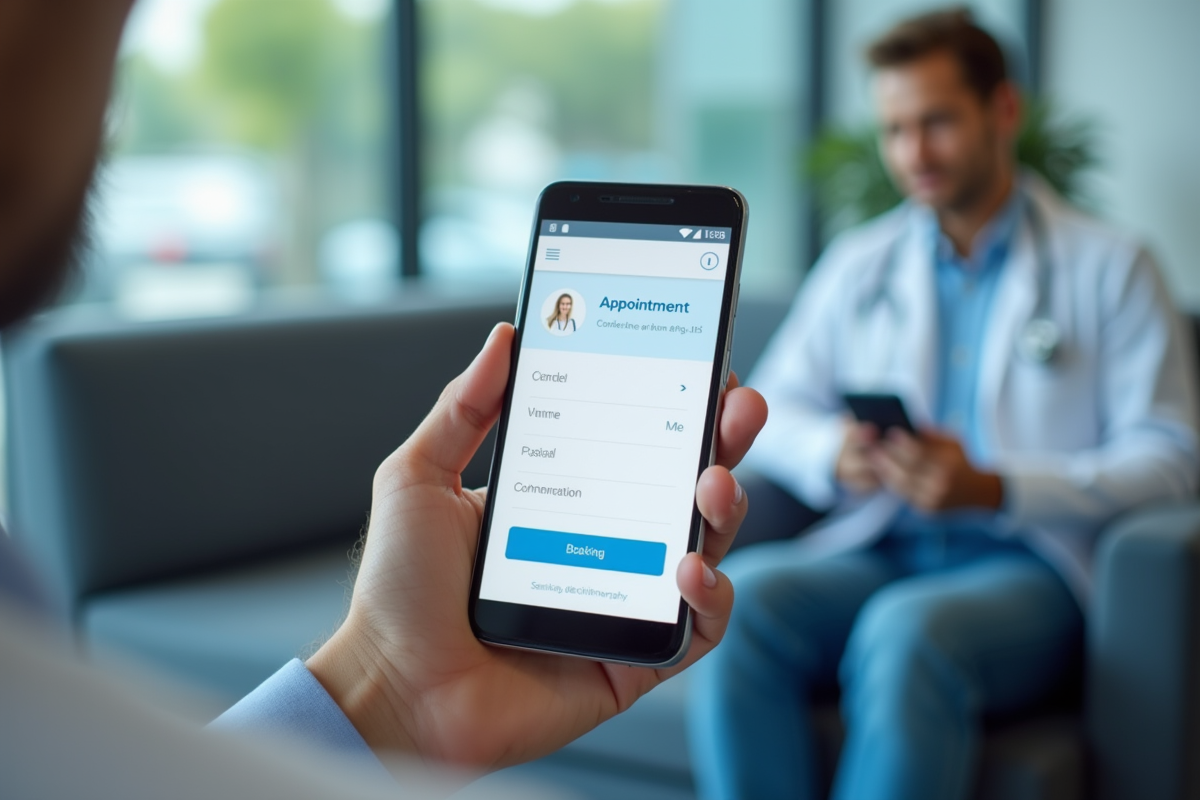
Digital health disrupts the dynamic between patients and healthcare professionals. Now, appointment booking is done directly, without going through the secretary. The patient chooses their time slot, receives an alert on their phone, and can even consult without traveling. The result: medical time is preserved, absences decrease, and the care pathway adjusts more easily to life’s unforeseen events.
However, automation never replaces human contact. Interaction, trust, the precision of a professional gaze: nothing substitutes these. Caregivers must therefore train in these tools, integrating them judiciously into their daily lives. Managing the electronic medical record is essential, as is ensuring data security. Every click, every consultation, engages the doctor’s responsibility in terms of confidentiality.
But not everyone is moving at the same pace. Some patients, unfamiliar with digital tools, risk being left behind. Therefore, it is essential to ensure that the transformation does not leave anyone by the wayside: accessibility, support, data protection. The sector must reaffirm its mission: to make every care, every appointment, simple and safe for all.
Here’s, concretely, what digitalization changes in the care relationship:
- Time savings for practitioners: more availability for care
- Increased traceability of appointments and medical follow-up
- Strengthening of requirements regarding health data security
This movement is not slowing down. Between digital agility and the imperative of humanity, medicine is charting a new course. The tools change, but the demand remains the same: to serve health, without detours.